BlackOhm was honored to support the 40th Anniversary Best Ranger Competition by providing real-time tracking technology that enhanced operational awareness throughout one of the Army’s most prestigious and demanding endurance competitions.
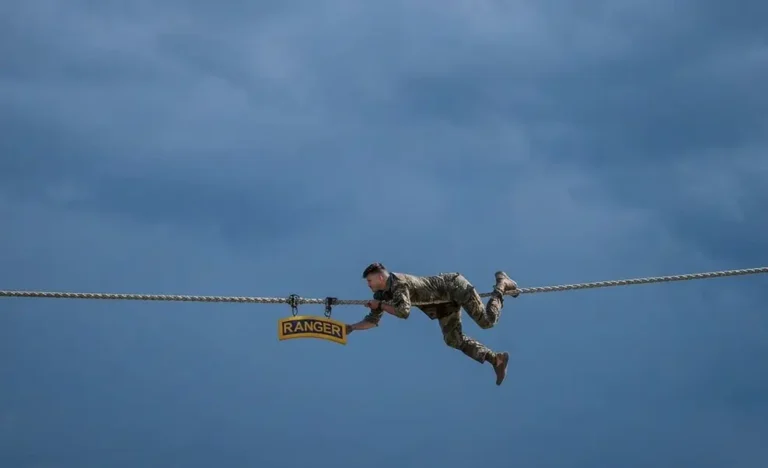
Hosted by the Maneuver Center of Excellence and the Airborne and Ranger Training Brigade at Fort Benning, Georgia, the Best Ranger Competition brought together elite Ranger-qualified Soldiers from across the Army to compete in a grueling multi-day event that tested physical endurance, tactical proficiency, leadership, and mental resilience. The competition marked four decades of Ranger excellence while showcasing the extraordinary professionalism and resilience of America’s premier warfighters.
Enhancing Operational Awareness
Throughout the event, BlackOhm deployed its Team Tracker solution, enabling event staff, leadership, and spectators to monitor competitor locations in real time as teams navigated complex courses across Fort Benning. The tracking platform provided continuous situational awareness throughout the competition, allowing organizers to maintain visibility of participants operating across large training areas while supporting efficient event coordination.
The Team Tracker was also integrated into the official Best Ranger Competition website, allowing family members, supporters, and viewers to follow competitors as they progressed through each stage of the competition. This capability provided a unique level of engagement while demonstrating how commercial technology can enhance military events without affecting competition integrity.
Supporting Safety and Event Coordination
Beyond improving spectator awareness, BlackOhm’s technology played an important role in supporting operational safety. Real-time location data allowed event personnel to identify competitor locations quickly, improve response times when competitors required assistance, and maintain a comprehensive Common Operational Picture throughout the demanding multi-day event. Continuous visibility across multiple competition venues empowered organizers to make informed decisions and ensure participant accountability.
The Best Ranger Competition once again demonstrated the Army’s commitment to excellence by challenging competitors with physically demanding, tactically complex events requiring teamwork, precision, and determination. BlackOhm was proud to contribute technology that supported the successful execution of the competition while reinforcing the importance of real-time situational awareness during large-scale military training events.
Advancing Mission Readiness
Supporting the 40th Anniversary Best Ranger Competition reflects BlackOhm’s ongoing commitment to advancing Soldier safety and operational effectiveness through innovative technology. Whether supporting elite competitions, major training exercises, or operational missions, BlackOhm continues to deliver solutions that provide commanders and event leaders with actionable information when it matters most.
As the competition concluded, BlackOhm congratulated every Ranger who competed and the organizers who made the milestone event a success. The company remains committed to supporting future military training events with technologies that strengthen readiness, improve operational awareness, and help ensure the safety of America’s Soldiers.
Best Ranger Competition
Elite military duos compete each year in the David E. Grange Jr. Best Ranger Competition at Fort Benning, Georgia. This grueling annual tournament tests the endurance of the military’s top two-man teams. Organizers established the event in 1982 to identify the best two-man “buddy” team within the Ranger Department, but the continuous three-day competition now includes top duos from across the entire armed forces. Competitors endure a grueling 58- to 72-hour test of physical, tactical and cognitive stamina, while officials permit only about four hours of cumulative rest over the weekend.
The three-day competition typically begins with 50 to 60 elite two-person teams, but ruthless attrition whittles the field down significantly over the weekend. To succeed, participants cover more than 60 miles on foot, carrying 50-pound rucksacks for roughly half that distance, and burn an estimated 30,000 to 35,000 calories. Teams complete upwards of 30 distinct challenges, including 18 tactical tasks and multiple water and obstacle courses.