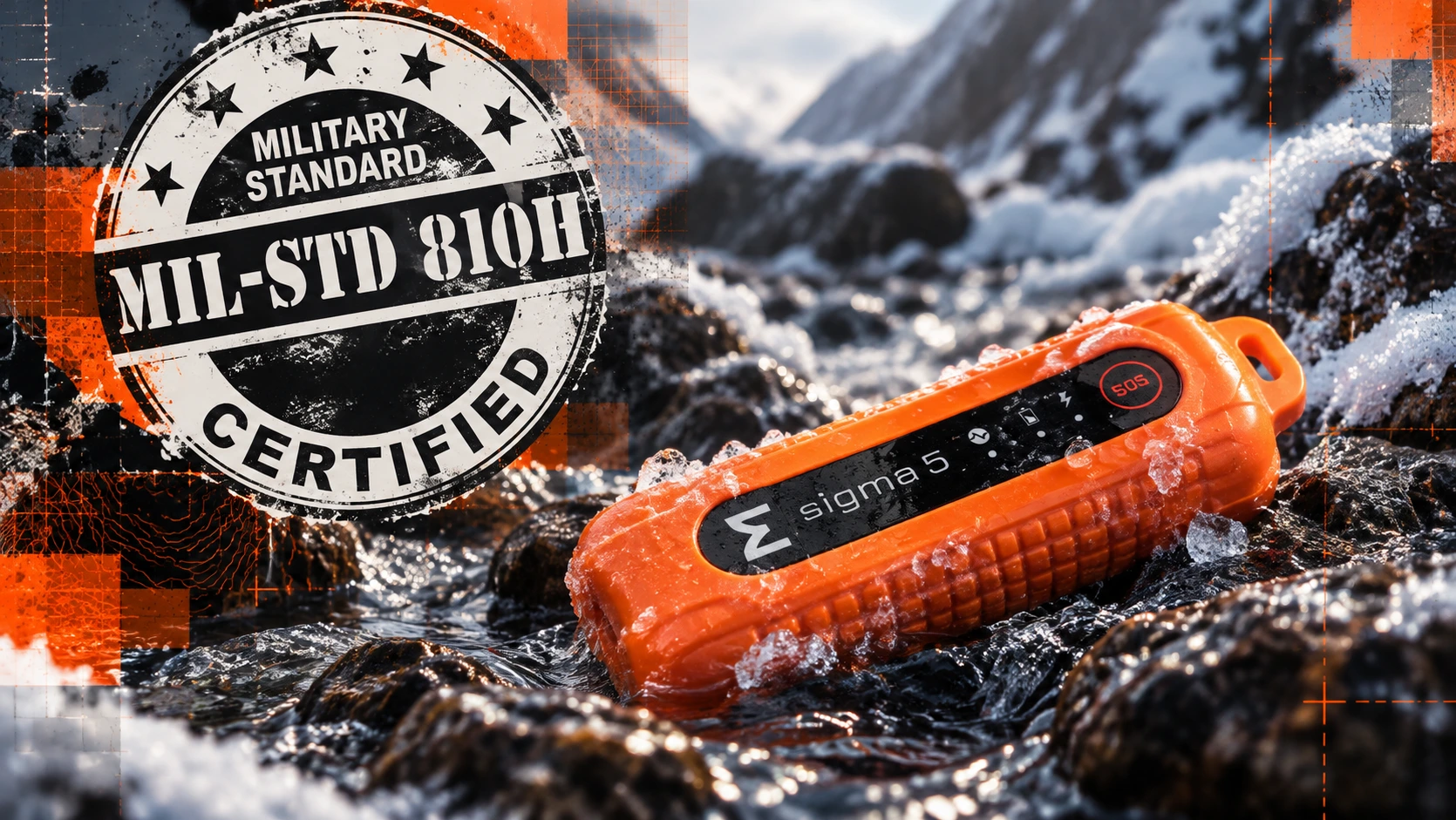
MIL-STD-810H is the U.S. Department of Defense environmental engineering standard used to evaluate whether hardware can withstand the mechanical, climatic, and operational stresses of its intended mission environment. It is not a single certification. Instead, MIL-STD-810H defines a tailored set of laboratory test methods that manufacturers use to validate rugged electronics, military communications equipment, GPS trackers, rugged tablets, sensors, vehicles, and defense-grade wearables.
For procurement teams, systems integrators, and technical buyers, the most important question is not simply whether a product is “MIL-STD-810H tested.” The decisive question is which specific test methods were performed, under which procedures, and whether those conditions reflect the actual deployment environment.
What MIL-STD-810H Actually Measures
MIL-STD-810H includes about 28 environmental test methods, generally numbered Method 500 through Method 528. These methods evaluate how equipment responds to temperature extremes, moisture, altitude, vibration, shock, sand, dust, salt fog, acoustic noise, and combined environmental stressors.
The standard emphasizes environmental tailoring: the test profile should reflect the product’s expected lifecycle environment, including storage, transportation, field operation, platform mounting, and recovery after exposure. This approach helps prevent over-testing, under-testing, and misleading ruggedness claims.
Temperature and Altitude Testing
Temperature and pressure methods are foundational for rugged electronics because heat, cold, and altitude can degrade batteries, displays, seals, solder joints, adhesives, and electronic components.
- MIL-STD-810H Method 501.7 — High Temperature: Evaluates operation and storage in elevated-temperature environments. This is critical for desert operations, vehicle interiors, direct sunlight exposure, and equipment mounted near heat-generating systems.
- Method 502.7 — Low Temperature: Tests cold-weather performance, including power-on capability, battery behavior, display response, and material flexibility.
- Method 503.7 — Temperature Shock: Simulates abrupt temperature transitions, such as moving a device from a climate-controlled vehicle into extreme outdoor heat or cold.
- Method 500.6 — Low Pressure/Altitude: Assesses performance at high elevation and during air transport, where reduced pressure can affect sealed enclosures, cooling performance, and pressure-sensitive components.
For a rugged GPS tracker, wearable device, or handheld navigation system, these methods help demonstrate reliable performance across hot, cold, mountainous, and air-transported conditions.
Rain, Immersion, and Moisture Protection
Water ingress is one of the most common causes of field failure in portable and vehicle-mounted electronics. MIL-STD-810H includes several methods that evaluate resistance to rain, immersion, icing, and freeze-thaw cycling.
- Method 506.6 — Rain: Tests resistance to wind-driven rain, blowing rain, and dripping water.
- Method 512.6 — Immersion: Determines whether equipment can survive temporary submersion at a defined depth and duration.
- Method 521.4 — Icing/Freezing Rain: Evaluates performance when ice forms on housings, connectors, antennas, displays, or moving parts.
- Method 524.1 — Freeze/Thaw: Measures damage caused by repeated freezing and thawing cycles.
These tests are particularly relevant for land navigation devices, soldier-worn trackers, radios, drones, and public-safety equipment used in wet terrain, coastal regions, or during adverse weather operations.
Sand, Dust, Fungus, and Corrosion
Contaminant testing verifies that a device can continue operating after exposure to abrasive particles, biological growth, corrosive salt, and operational fluids.
- Method 510.7 — Sand and Dust: Tests exposure to blowing dust and sand, which can infiltrate connectors, buttons, ports, fans, and optical surfaces.
- Method 509.7 — Salt Fog: Measures corrosion resistance in maritime, coastal, and high-humidity environments.
- Method 508.8 — Fungus: Evaluates resistance to fungal growth in warm, humid climates.
- Method 504.3 — Contamination by Fluids: Tests exposure to fuels, hydraulic fluids, lubricants, cleaning agents, and other chemicals encountered in military or industrial environments.
- Method 511.7 — Explosive Atmosphere: Determines whether equipment can operate safely where flammable gases, vapors, or combustible dust may be present.
For defense and public-safety buyers, sand-and-dust and salt-fog performance often matter more than a generic IP rating because they simulate prolonged field exposure rather than a single ingress event.
Vibration, Shock, and Mechanical Durability
Mechanical stress methods validate whether equipment survives transportation, handling, vehicle movement, and combat-related events.
- Method 514.8 — Vibration: Simulates vibration from tactical vehicles, aircraft, ships, trailers, and transport containers.
- Method 516.8 — Shock: Evaluates sudden mechanical impacts, including drops, rough handling, and transportation shock.
- Method 513.8 — Acceleration: Tests sustained acceleration associated with aircraft, high-speed platforms, and launch or recovery events.
- Method 517.3 — Pyroshock: Measures response to high-frequency, short-duration shock caused by explosive events.
- Method 522.2 — Ballistic Shock: Evaluates equipment exposed to shock from ballistic impact or nearby detonations.
- Method 526.1 — Rail Impact: Simulates shock conditions during rail transport.
For rugged wearables and GPS tracking devices, Method 514.8 vibration and Method 516.8 shock are commonly cited because these devices are frequently worn, mounted, transported, and handled in demanding field conditions.
Acoustic and Combined-Environment Testing
Some platforms subject equipment to multiple stressors simultaneously. MIL-STD-810H includes combined-environment methods for these scenarios.
- Method 515.8 — Acoustic Noise: Evaluates performance near aircraft, engines, generators, and other high-noise equipment.
- Method 520.5 — Temperature, Humidity, Vibration, and Altitude: Combines environmental stresses to simulate air transport and airborne platform conditions.
- Method 523.4 — Vibro-Acoustic/Temperature: Tests equipment exposed to vibration, acoustic energy, and temperature changes at the same time.
- Methods 525.2, 527.1, and 528.1: Address advanced vibration environments, including time-waveform replication, multi-exciter vibration, and shipboard vibration.
These methods matter most for avionics, shipboard systems, unmanned platforms, and equipment installed near engines or propulsion systems.
How to Evaluate a MIL-STD-810H Claim
A credible rugged-device specification should identify the exact methods and procedures tested. For example, a product specification might state: “Tested to selected MIL-STD-810H methods, including Method 501.7 high temperature, Method 502.7 low temperature, Method 510.7 sand and dust, Method 514.8 vibration, and Method 516.8 shock.”
That wording is more accurate and procurement-friendly than a broad “MIL-STD-810H certified” claim. Because MIL-STD-810H is tailored rather than universal, a vendor could test only one method and still reference the standard.
Why It Matters for Defense Technology
For defense technology companies, MIL-STD-810H testing supports risk reduction, mission readiness, and lifecycle reliability. It also gives technical buyers a common framework for comparing products intended for similar environments.
When evaluating a rugged GPS tracker, tactical radio, rugged tablet, or personnel-tracking device, request the full test report or declaration of conformity. Confirm the tested methods, procedures, test levels, duration, sample configuration, and any deviations. This ensures the device isn’t just marketed as rugged, but validated for the specific environmental conditions it will face in the field.
BlackOhm Devices Built for Demanding Field Conditions
BlackOhm’s Dismounted Tracking Unit (DTU) combines MIL-STD-810H testing with an IP68-rated, submersible enclosure and a −40°C to +75°C temperature range. Integrated antennas keep the profile compact, while wireless charging simplifies turnaround between deployments. With up to six weeks of runtime at hourly check-ins, the DTU supports extended accountability missions with fewer charging stops.
Wearable monitoring faces another challenge: keeping pace with the wearer. BlackOhm’s Safety Physiological Monitor (SPM) combines location tracking and physiological monitoring with MIL-STD-810H testing, IP68 protection, and a submersible enclosure. Its −20°C to +60°C temperature range and up to 500 hours of battery life support prolonged field use, bringing personnel visibility and physiological data into demanding training and operational environments.
Aircraft accountability extends the same need for rugged hardware into the air. Autonomous Tracking Unit (ATU) brings MIL-STD-810H-tested construction, IP67 protection, and a −20°C to +60°C temperature range to Group 1–3 sUAS. Its lightweight design supports airframe integration, while real-time GPS tracking and configurable reporting help operators follow aircraft across training areas and mission boundaries. Flight-path playback carries that visibility into the after-action review, helping teams reconstruct movements and analyze mission execution.