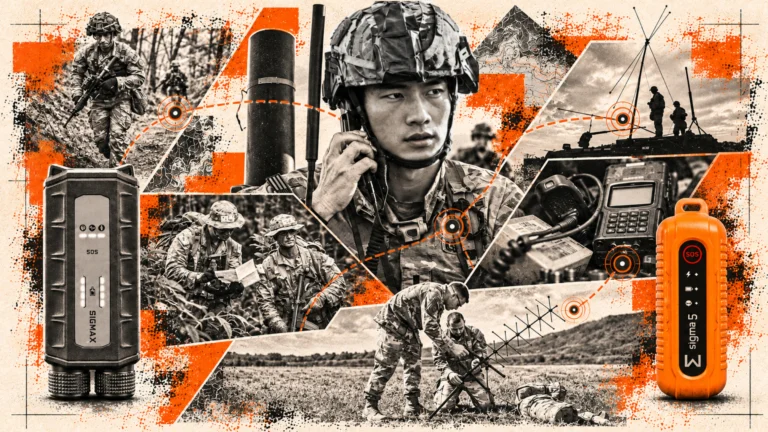
BlackOhm Sigma and Sigma X Dismounted Tracking Units (DTUs) provide personnel location information that strengthens accountability, situational awareness, and operational coordination. Designed for personnel operating beyond vehicles and fixed positions, these devices support military training and field operations by giving authorized leaders visibility of dispersed teams. Integrating DTU personnel tracking into military PACE planning connects communications procedures with location awareness. Commanders gain additional context for coordinating movements, monitoring personnel distribution, and maintaining accountability throughout an exercise.
What Is a PACE Plan?
PACE stands for primary, alternate, contingency, and emergency. Military organizations use this framework to establish communication options before equipment failures, network disruptions, or changing conditions affect an operation.
The primary method supports routine communications. The alternate provides the next option when the preferred method becomes unavailable. The contingency establishes another approach when the first two methods cannot be used. The emergency method supports critical communications when other options are unavailable.
Together, these four methods give personnel a defined communications sequence. Personnel accountability belongs alongside that communications framework. A PACE plan establishes how teams exchange information, while DTU tracking adds location context to the reports leaders receive.
DTU Personnel Visibility Beyond Radio Reports
BlackOhm’s personnel-tracking capabilities support military training, airborne missions, remote field operations, and large-scale events. Authorized users can organize personnel by unit or team, review reported locations and assess movement across designated operating areas.
For commanders and training staff, this creates a practical connection between communications and accountability. A radio report explains a team’s activity and requirements; a DTU position report adds geographic context. Together, they help leaders understand where reported activity is taking place and where further coordination is needed.
Supporting Large-Scale Training and Joint Forcible Entry
Large-scale training events, including joint forcible entry (JFE) exercises, place significant demands on communications, accountability, and coordination. These exercises bring together multiple formations and joint capabilities as forces conduct entry operations and transition into follow-on activity. Army observations from the Joint Readiness Training Center emphasize rehearsed PACE plans and effective use of mission command systems to maintain a common operational picture during these transitions.
In a JFE training scenario, DTU personnel tracking can help exercise controllers assess reported positions as participants move from landing areas to assembly locations and subsequent training tasks. This is a practical application of BlackOhm’s airborne and ground personnel-tracking capabilities, which support visibility through descent, landing, recovery, and movement across the operating area.
The planning objective is to connect each phase of the exercise with clear accountability responsibilities. Tracking information gives leaders another reference for understanding personnel distribution as formations assemble, reorganize, and continue training.
Personnel Accountability During Distributed Training
Sigma and Sigma X DTUs support personnel visibility across demanding field environments. Their portable, rugged designs keep tracking as part of the equipment personnel carry during training and operational activity.
For land navigation, field exercises, and combat training rotations, BlackOhm’s personnel-tracking environment provides current and historical location information that supports accountability and recovery coordination. Training staff can review reported movement and identify personnel who may be separated from their teams or outside planned operating areas. These capabilities give cadre additional information to direct follow-up, coordinate support, and review how an exercise developed.
Connecting DTU Tracking to the Omega Common Operational Picture
The Omega common operational picture brings supported tracking information into a shared interface. Users can organize devices into groups, establish geofences, configure alerts, and monitor reported movement across an operating area.
For DTU-equipped teams, the operational value comes from viewing personnel information within the wider exercise. Rather than interpreting individual reports in isolation, leaders can compare location updates with communications reports, assigned areas, and planned activity.
This approach connects dismounted personnel tracking with the command team’s broader understanding of the mission.
Integrating DTUs Into an Army PACE Plan
Integrating DTUs into Army PACE planning connects personnel visibility with communications preparation and accountability procedures. Effective integration starts with clearly assigned monitoring responsibilities, mission-appropriate reporting intervals, and defined actions for reviewing personnel location data. Position timestamps show when each location was reported, helping leaders assess the information’s age and prioritize follow-up.
Rehearsals bring DTU monitoring, radio reports, and accountability checks together under changing mission conditions. Scenarios involving delayed location updates, interrupted radio contact, and conflicting reports help teams identify monitoring gaps, refine responsibilities, and strengthen coordination. DTU tracking provides location context to guide follow-up, while direct communication and established accountability procedures remain central to confirming personnel status. Together, these inputs give leaders a more complete operational picture and a coordinated approach to maintaining accountability.